Events
Seminars
09.04.2026
NAMs Road Map was published in April 2025. The goal in non-clinical safety studies is to transition from animal studies into NAMs within 3 to 5 years. FDA is accelerating validation and adoption of these methods, aiming to reduce animal use while improving predictive accuracy. However, pharmaceutical companies lack this information, and there are lots of uncertainties about what kinds of studies FDA will require when submitting IND/NDA files. In this video, we have delved deeper into unclear points with Dr. McGovern, a former FDA senior manager who had produced the NAMs Road Map.
09.10.2026
Translational risk remains a major challenge in obesity and kidney disease drug development, often leading to uncertainty in preclinical decision-making. In obesity, the success of GLP-1 therapies has set a new benchmark, driving the development of both novel mechanisms beyond GLP-1 and combination strategies to address its limitations, including nausea, muscle loss, and weight regain. However, conventional preclinical evaluation based on body weight alone often fails to distinguish true pharmacological efficacy from adverse effect–driven outcomes.
08.25.2026
Translational risk remains a major challenge in oncology and immunology drug discovery. In oncology, the complexity of the tumor microenvironment and the growing diversity of therapeutic modalities—including antibody-drug conjugates (ADCs) and protein degraders—make it difficult to evaluate efficacy and predict clinical outcomes using conventional preclinical models. In immunology, disease heterogeneity and fundamental differences between rodent and human immune systems often limit confidence in target validation and candidate selection.
07.22.2026
Drug discovery for central nervous system (CNS) and muscle diseases continues to face major translational challenges. Conventional models often fail to capture human disease biology, while functional readouts can be difficult to reproduce, interpret, and translate into clinically meaningful outcomes.
9.24.2025
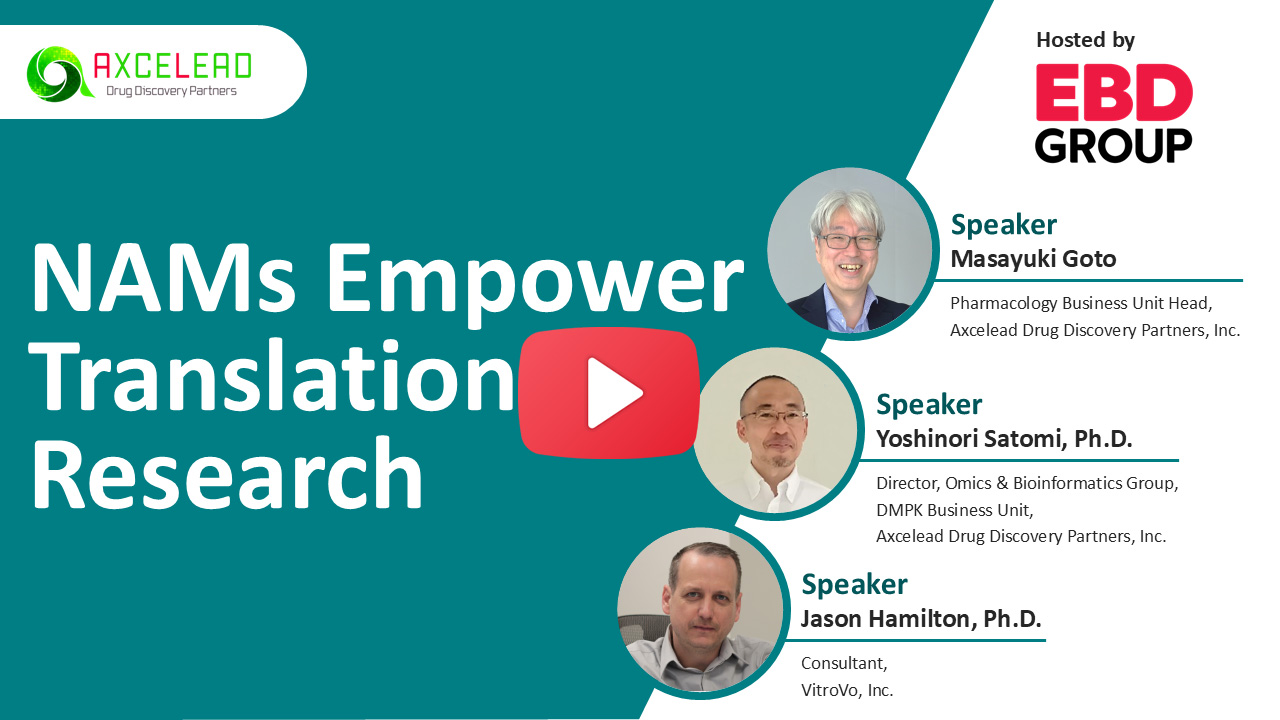
In April, the FDA announced that New Approach Methodologies (NAMs) will be encouraged to include in IND applications, while reducing the animal testing requirements. This webinar will provide three key technologies relevant to NAMs. These technologies can be introduced prior to IND or clinical studies.
7.29.2025
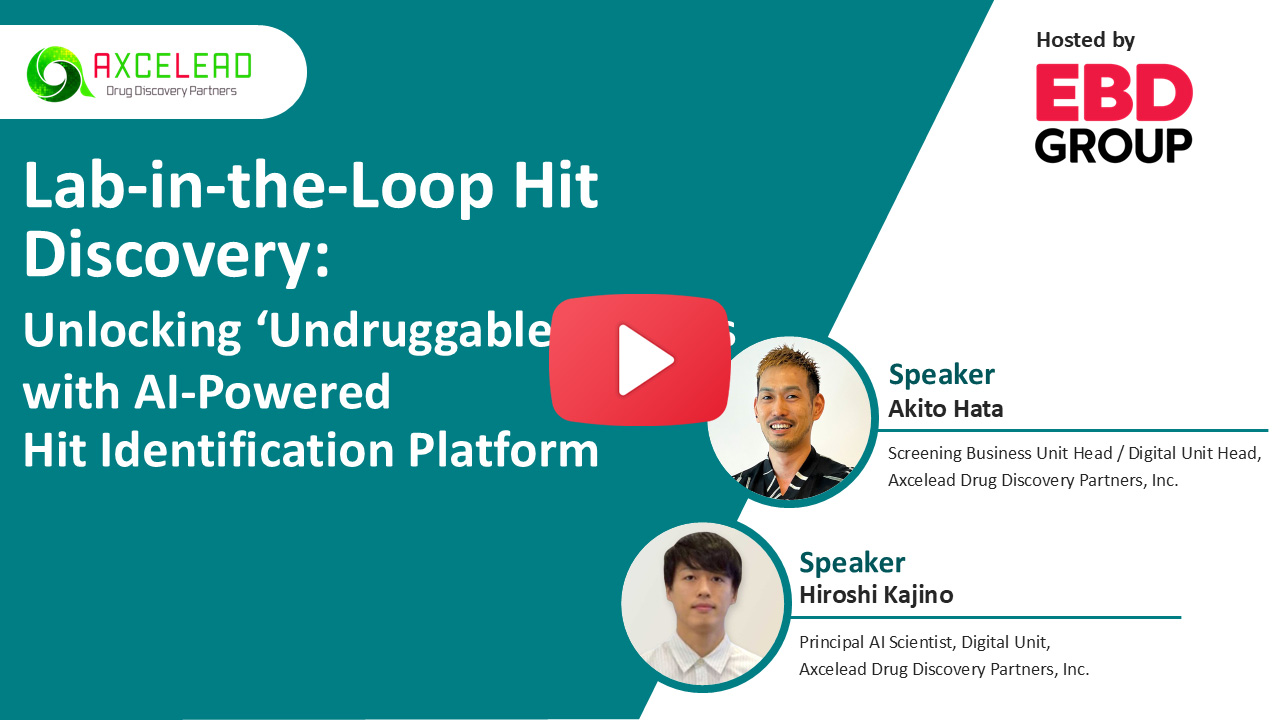
The discovery of lead compounds for classical druggable targets has become increasingly efficient; however, the development of therapeutics targeting “undruggable” targets continues to face significant hurdles and unmet needs. One of the key challenges in the hit-finding stage is the difficulty in identifying initial hits and obtaining seed compounds that can serve as viable starting points for lead optimization.
2.19.2025
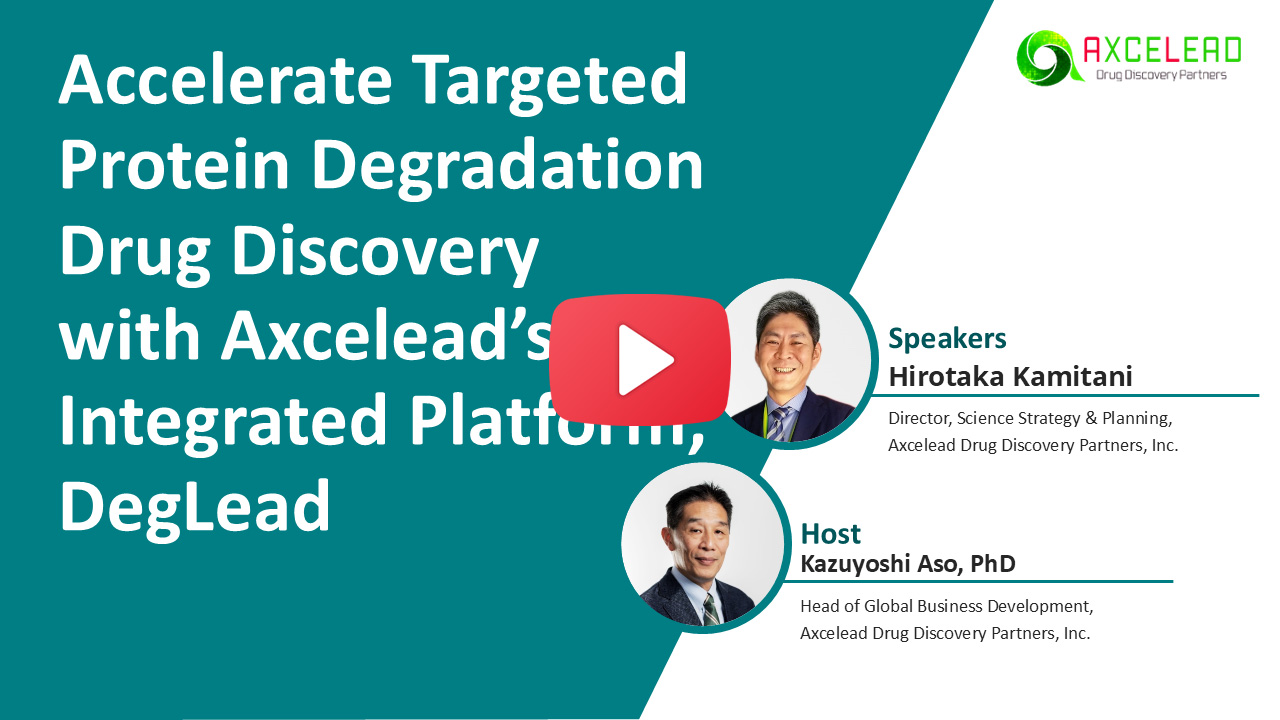
Targeted Protein Degradation (TPD), including bifunctional degraders and molecular glue degraders, represents a paradigm shift in small molecule drug discovery. However, challenges remain in successfully discovering new TPD drugs. For example, bifunctional degraders face issues such as unfavorable ADME and physicochemical properties due to their molecular complexity. Regarding molecular glue degraders, the discovery of promising compounds often relies heavily on serendipity.
12.05.2024
High Throughput Screening (HTS) is one of the most powerful tools in small molecule drug discovery for identifying promising novel leads. The success of HTS depends on the design of an appropriate screening flow, the development of robust assay systems, and the availability of a high-quality compound library.